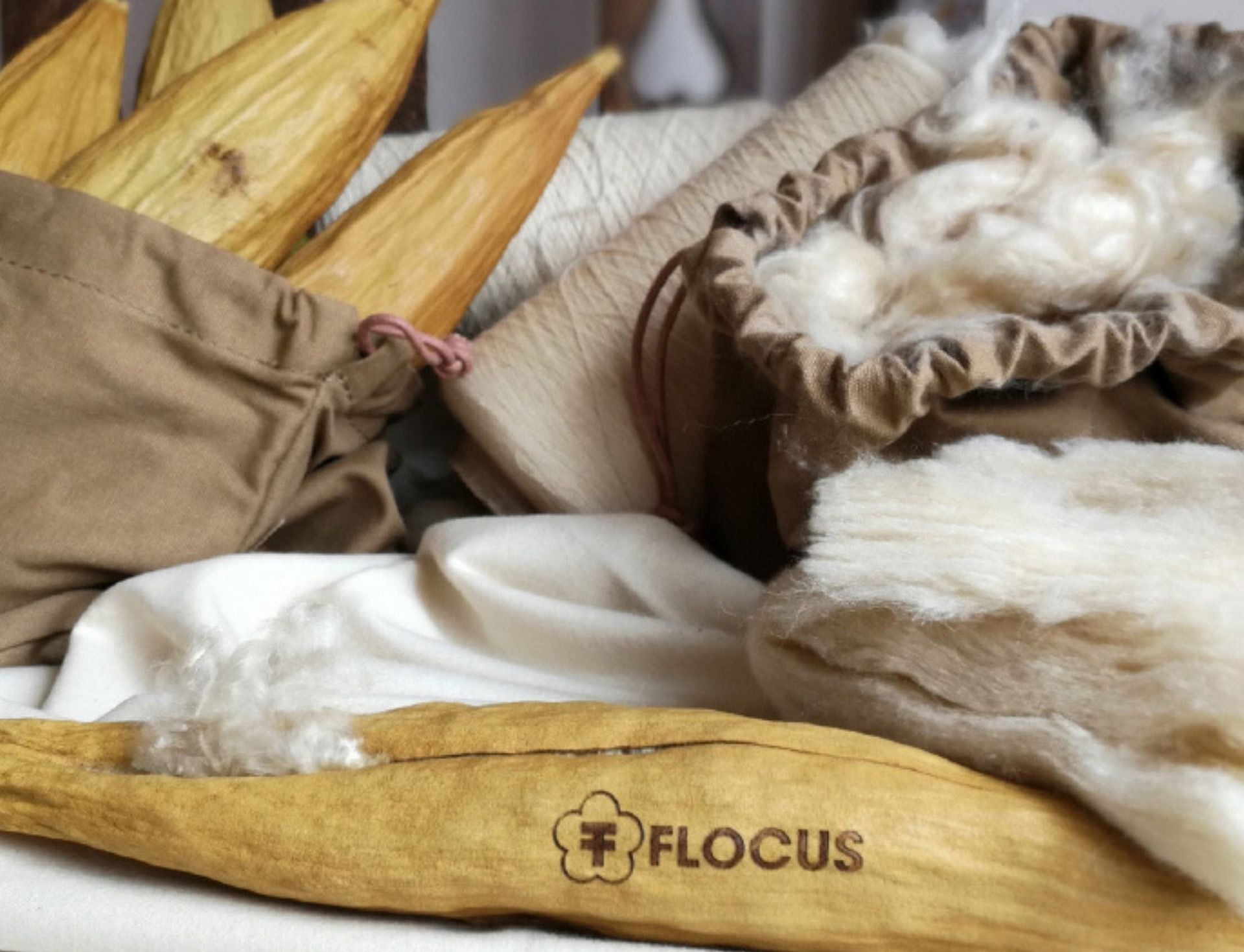
Kapok is a natural, plant-based fibre obtained from the seed pods of the kapok tree ( Ceiba pentandra ). Exceptionally lightweight, soft and naturally water-repellent, its hollow structure makes it particularly interesting for thermal insulation, yarns, nonwovens and filling applications.
But what makes kapok remarkable is not only the fibre. It is also the tree that produces it.
In suitable tropical conditions, established kapok trees can thrive on natural rainfall without routine irrigation, pesticides or chemical fertilisers. The fibre is harvested from the pods, meaning the tree does not need to be cut down and can continue producing for decades.
At Flocus, we have been working with kapok since 2013, developing the technology and industrial infrastructure needed to bring this natural fibre into modern textile manufacturing.
What makes kapok different from cotton and other natural fibres?
The first thing you notice when you touch kapok is how incredibly light it feels.
Each fibre contains a large hollow cavity, known as the lumen , which can account for approximately 70% to 80% of its volume. This unusual structure helps explain several of kapok’s distinctive characteristics.
Exceptionally lightweight
Kapok has a much lower density than cotton, making it interesting for lightweight textiles, padding and insulation.
Naturally insulating
Its hollow structure helps retain air, contributing to thermal insulation in bedding, garments and nonwovens.
Water-repellent
Its naturally waxy surface resists wetting and, combined with low density, contributes to buoyancy.
Soft and silky
Its fine, smooth texture makes kapok attractive for filling materials and selected textile applications.
These natural properties make kapok special. But how the fibre is processed determines whether it can meet the requirements of industrial manufacturing.
What is kapok fiber used for?
Traditionally, kapok has been used for pillows, mattresses, cushions and other filling applications. Today, its possibilities extend much further.
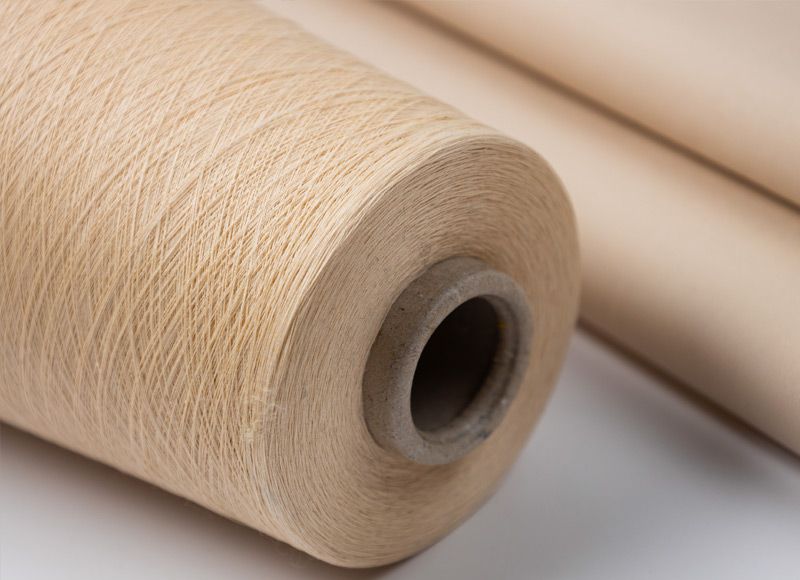
Yarns and fabrics
Kapok can be blended with cotton and other fibres for textile applications, including clothing and home textiles.
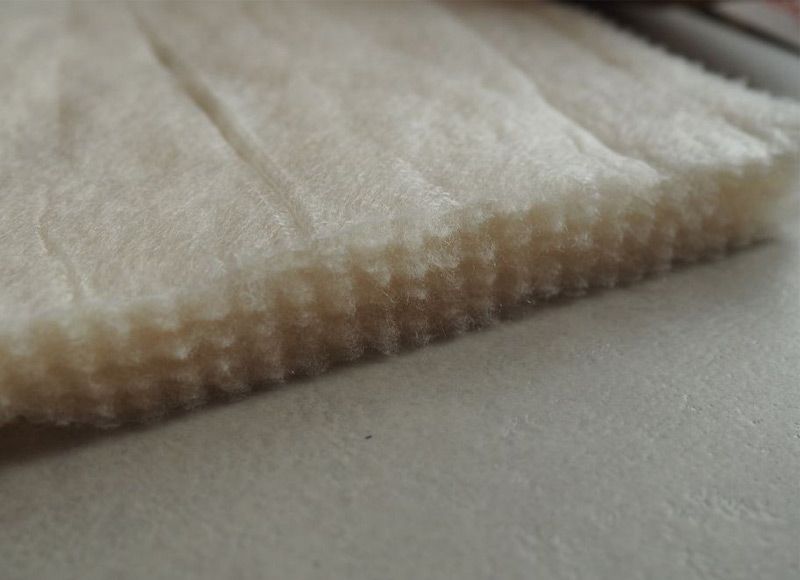
Nonwovens and insulation
Kapok’s lightweight, hollow structure makes it interesting for insulation, padding and technical nonwoven products.
Kapok is also used for stuffing and is being explored for acoustic insulation, filtration and composites.
An important distinction is that kapok for spinning is not the same as kapok for stuffing or nonwovens . Different applications require different fibre characteristics, cleanliness levels and preparation methods.
Why hasn’t kapok been used more widely?
For decades, kapok remained a largely traditional industry despite the exceptional properties of the fibre.
One of the biggest obstacles was not the fibre itself, but how it was produced.
Traditional kapok processing has often relied on manual labour, informal employment arrangements and limited oversight of working conditions. Manufacturers also faced unpredictable production volumes, inconsistent cleanliness and insufficient quality control.
Without reliable quantities, repeatable specifications and a socially responsible supply chain, kapok struggled to become a dependable industrial raw material.
This is what Flocus set out to change.
How is Flocus changing the kapok industry?
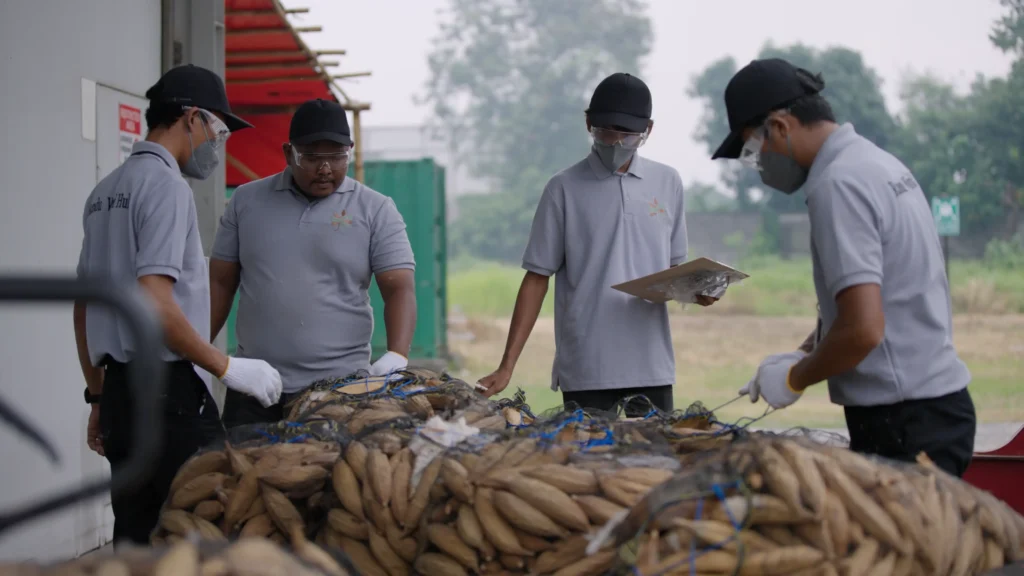
Through Randu World Hub (RWH) in Indonesia , Flocus has developed an automated industrial kapok processing facility that centralises mechanical operations, introduces systematic quality control and puts workers’ rights at the centre of production.
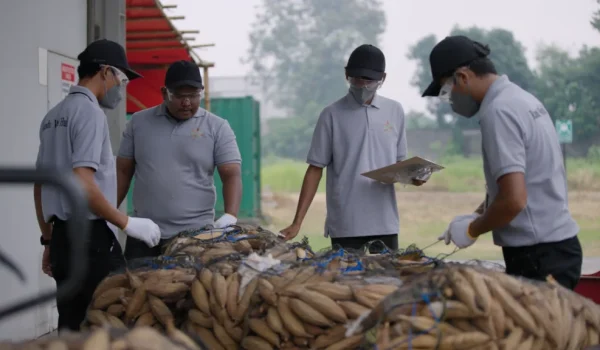
Automated processing, reliable volumes and premium quality
RWH uses dedicated machinery for pod opening, separation and fibre preparation, reducing dependence on traditional manual processing.
This centralised system supports controlled cleanliness, consistent specifications and the production capacity required by industrial textile manufacturers.
Two premium fibre grades for different applications
Clarus™
Selected and prepared with particular attention to fibre length, cleanliness and the reduction of unsuitable short fibres.
For yarns and fabricsFina™
Mechanically cleaned and prepared for applications requiring clean, consistent kapok fibre.
For insulation, padding and stuffingFlocus’s patented technology for spinning and nonwoven applications supports the use of kapok beyond traditional filling materials. The distinction between Clarus™ and Fina™ means manufacturers can select a grade developed for their intended process.
Social compliance and workers’ rights
For Flocus, industrialisation has never been only about machinery.
At Randu World Hub, formal employment, fair compensation, workplace safety and structured social compliance practices are central to the operating model.
The ambition is to establish a professional, accountable alternative to the informal and seasonal working arrangements historically found in parts of the kapok industry.
Premium quality should never come at the expense of the people producing it.
OEKO-TEX® certified fibre
Flocus supplies kapok fibre certified to OEKO-TEX® STANDARD 100, Product Class I , confirming testing against the standard’s requirements for harmful substances.
This is separate from the facility’s labour and social compliance practices. Together with controlled processing and quality assurance, these provide manufacturers with greater confidence in their raw material supply.
The future of kapok
Kapok is not a new fibre. Its lightness, softness and natural insulating properties have existed for centuries.
What is changing is how it can be processed, controlled and supplied.
At Flocus, we believe the future of kapok depends on bringing together its natural characteristics with automated industrial production, patented technology, certified fibre quality and responsible working conditions.
Because a remarkable natural fibre deserves an equally responsible and reliable industry behind it.
Contact Flocus to discuss your technical requirements and learn more about Clarus™ and Fina™.
Contact Flocus